

What happens after a platform reports your sales to HMRC?

When eBay reports your sales to HMRC (DAC7)
From January 2024 onward, eBay (and all similar platforms) must send a DAC7 report to HMRC every year.This report includes:
Seller’s name, address, and NINO (if provided)
Total sales amount (gross)
Number of transactions
Fees, commissions, and refunds
They must do this if, in a calendar year, you:
Sell more than 30 items, or
Make over €2,000 (around £1,740) in sales.
This is purely an information report — it doesn’t trigger automatic tax, penalties, or a requirement to fill in a return by itself.
What HMRC actually does with that data
HMRC receives a giant file from eBay and all the other platforms each year. They don’t auto-issue tax bills or instantly demand returns.
Instead, they:
Cross-check the reported names and sales against existing Self Assessment records.
If you’re already registered for Self Assessment, they’ll expect your figures to include this income.
If you’re not registered, but your totals look like “trading activity,” they may write to you (usually later in the year) inviting or instructing you to register.
That’s why, in most cases, you don’t have to do anything immediately after eBay reports your sales — unless you know you’ve earned over £1,000 from trading.
So when do you actually have to file a return?
You need to complete a Self Assessment tax return if any of the following apply:
You’ve earned over £1,000 in total trading income (not profit) in a tax year.
HMRC has written to you asking for a return.
You want to declare a loss (to offset against future profits).
You’ve made income from other self-employed work (Etsy, Depop, etc).
If you’re under £1,000 — or it’s all personal item sales — you don’t need to file or register.
What happens if HMRC writes to you
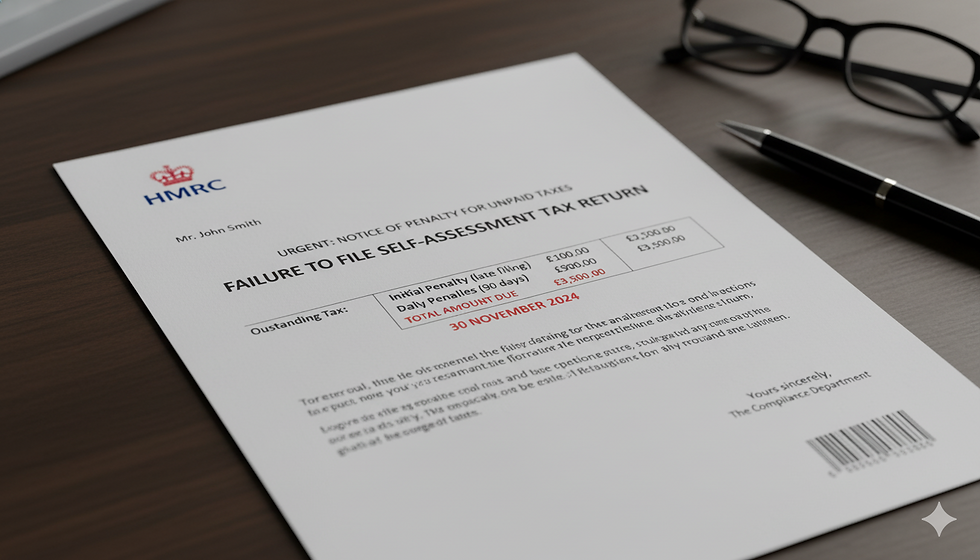
If HMRC receives data suggesting you may be trading, they’ll send a letter or email that usually says something like:
“We’ve received information from online platforms showing you’ve earned income.If you believe this income should be declared, please register for Self Assessment.”
They’ll give you a deadline to respond — usually by 5 October following the tax year.
You then:
Register for Self Assessment on GOV.UK
Fill in your return (covering the 6 April–5 April tax year)
Pay any tax owed by 31 January
If it turns out the income was from personal sales, you can simply tell them that.
Example Scenarios
Seller | Sales | Trading? | eBay reports to HMRC? | HMRC expects tax return? |
Lisa | £800 total | Selling old clothes | ❌ No | ❌ No |
Darren | £1,500 total | Buys to resell | ✅ Yes | ✅ Must file |
Raj | £2,200 total | Mix of own + trading | ✅ Yes | ✅ File trading part only |
Emma | £2,500 total | Only own belongings | ✅ Yes | ❌ No, but HMRC may ask for clarification |
Ready to make tax simple?
Don't get caught out by the new tax rules!
We’ll calculate your income, costs, and taxable profit — ready for HMRC.Covering 6 April 2024 – 5 April 2025 ready for tthe next filing deadline of 31st January 2026.
Why sellers love it;
Simple: One upload, one clear report
Accurate: Matches HMRC tax year and rules
Self Select: You can self-select 'own items' or 'trading items'
Private: You stay in control of your data
Tax Efficient: Calculates all platform sales and uses best methods of lowering tax
Affordable: Only £39 for the full 2024/25 tax year


Comments